

Visualization Acceleration
AI and the New Speed of Design Communication
Ionut-Alexandru Abordeoaei
3/12/20261 min read
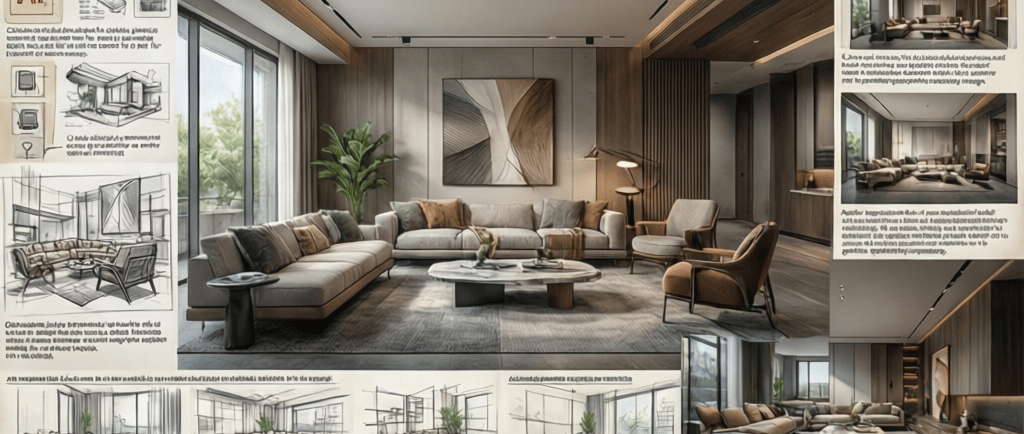
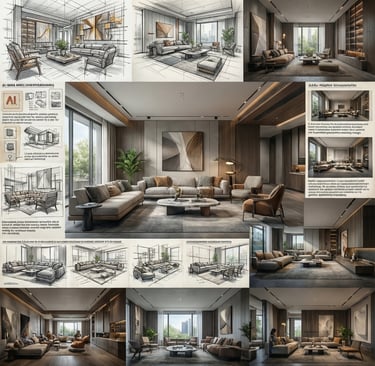
Visualization has always been central to interior design. Sketches, 3D models, and photorealistic renderings help translate abstract concepts into understandable proposals for clients and collaborators. Artificial intelligence is now transforming this stage by dramatically reducing the time required to produce convincing visual representations.
AI-based tools can generate high-quality interior images from simple prompts, sketches, or rough 3D models. What previously required hours or days of rendering can now be produced in minutes. Designers can quickly test variations of materials, lighting scenarios, furniture arrangements, or stylistic directions without rebuilding the entire scene.
This acceleration changes the dynamics of the design process. Client discussions become more iterative and interactive. Instead of presenting a single finalized rendering, designers can explore multiple options in real time, allowing clients to understand spatial possibilities more clearly and make decisions earlier in the project.
Another important effect is the democratization of visualization. High-end rendering used to require specialized software, powerful hardware, and technical expertise. AI tools reduce this barrier, enabling smaller studios or independent designers to produce presentation-quality imagery.
However, this speed also introduces risks. AI-generated visuals may appear extremely convincing while lacking technical accuracy. Lighting, proportions, material behavior, or construction details may not correspond to reality. Without careful verification, such images can create unrealistic expectations during client presentations.
For professional practice, visualization must remain connected to architectural logic. AI-generated imagery should support the design process but not replace the technical modeling that ensures feasibility. Designers must therefore maintain control over geometry, materials, and construction logic, using AI primarily as a communication accelerator.
In this evolving workflow, the designer’s role becomes more strategic. Instead of focusing solely on rendering production, the designer curates visual narratives—using AI tools to communicate ideas faster while maintaining technical credibility and design integrity.