Light & atmosphere
One room, two lives: daylight and the evening mood
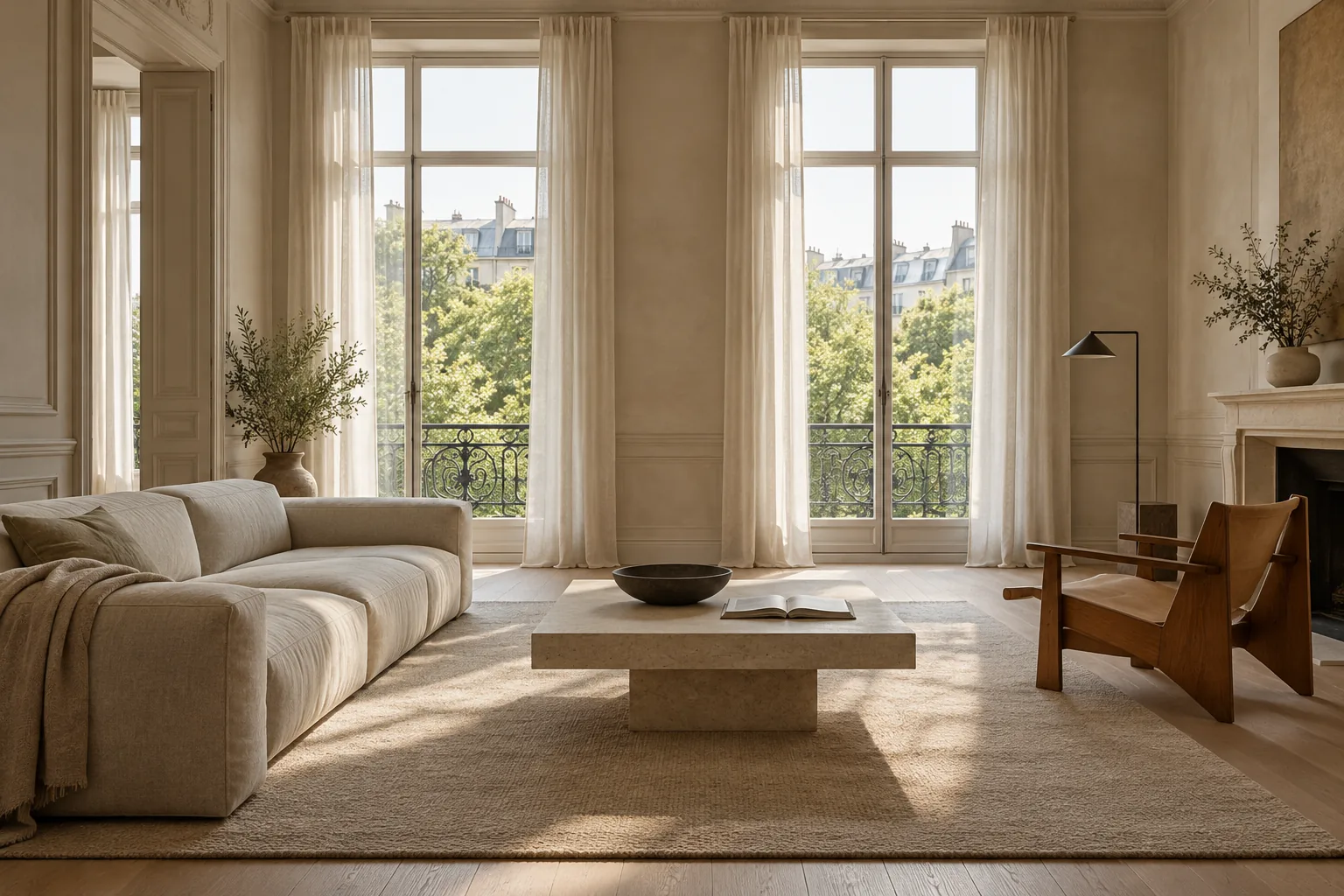
By day, the window organises the room. In the evening that authority moves: towards a lit table, a textured wall or an armchair emerging from shadow. The furniture stays in place, yet the space seems to find a new centre. Light can tell two stories in the same room.
A window brings movement indoors
Daylight connects an interior with what happens outside. An overcast sky softens shadows; low sunshine draws long shapes; a sheer curtain turns a sharp edge into a gradual transition. A room has no single fixed appearance. It changes with the hour and the weather.
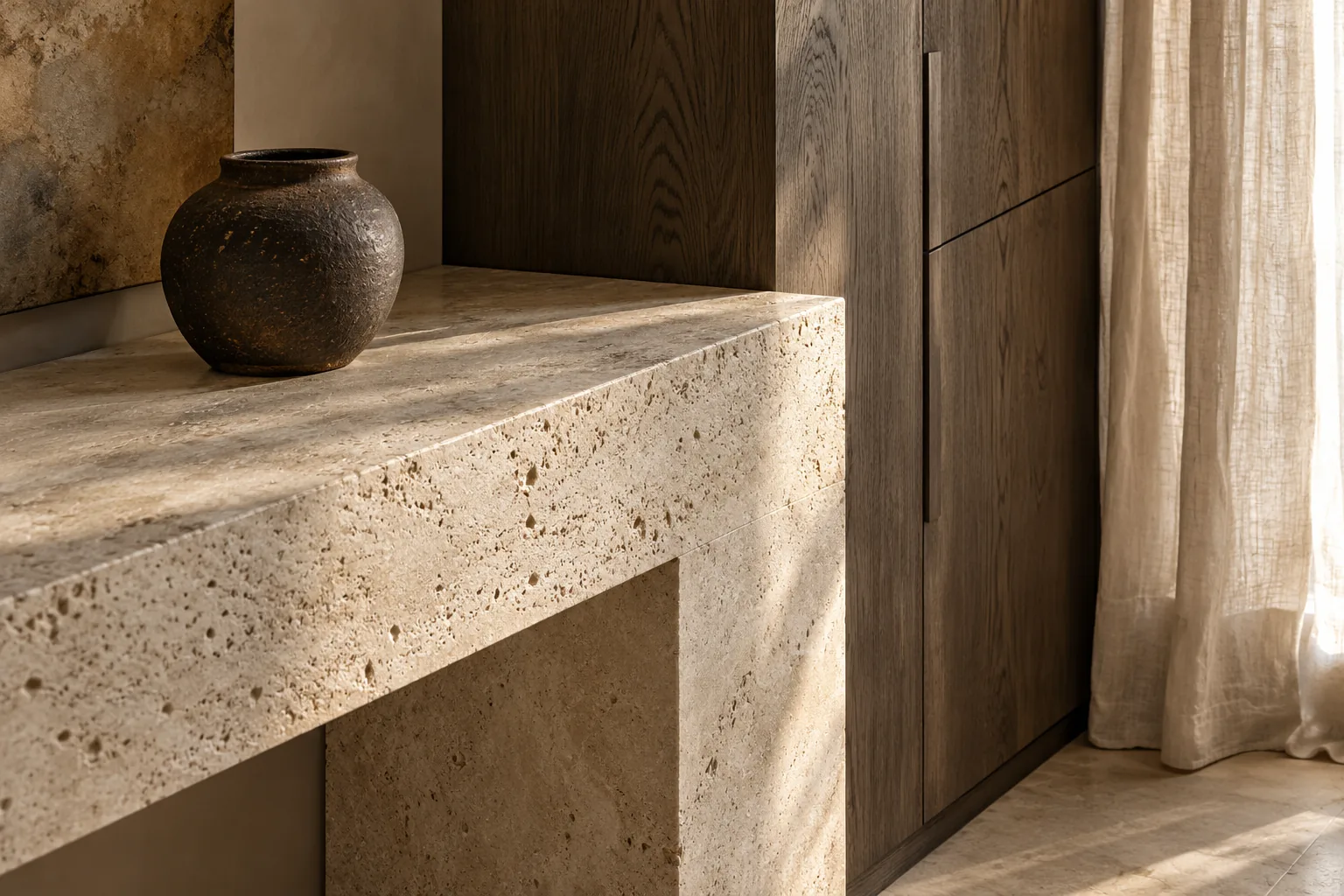
That movement becomes part of its composition. A simple surface can remain engaging because it receives changing light. A textured wall may need little additional decoration when its small shadows shift throughout the day. Architecture provides the setting; light changes the reading.
Evening establishes another centre
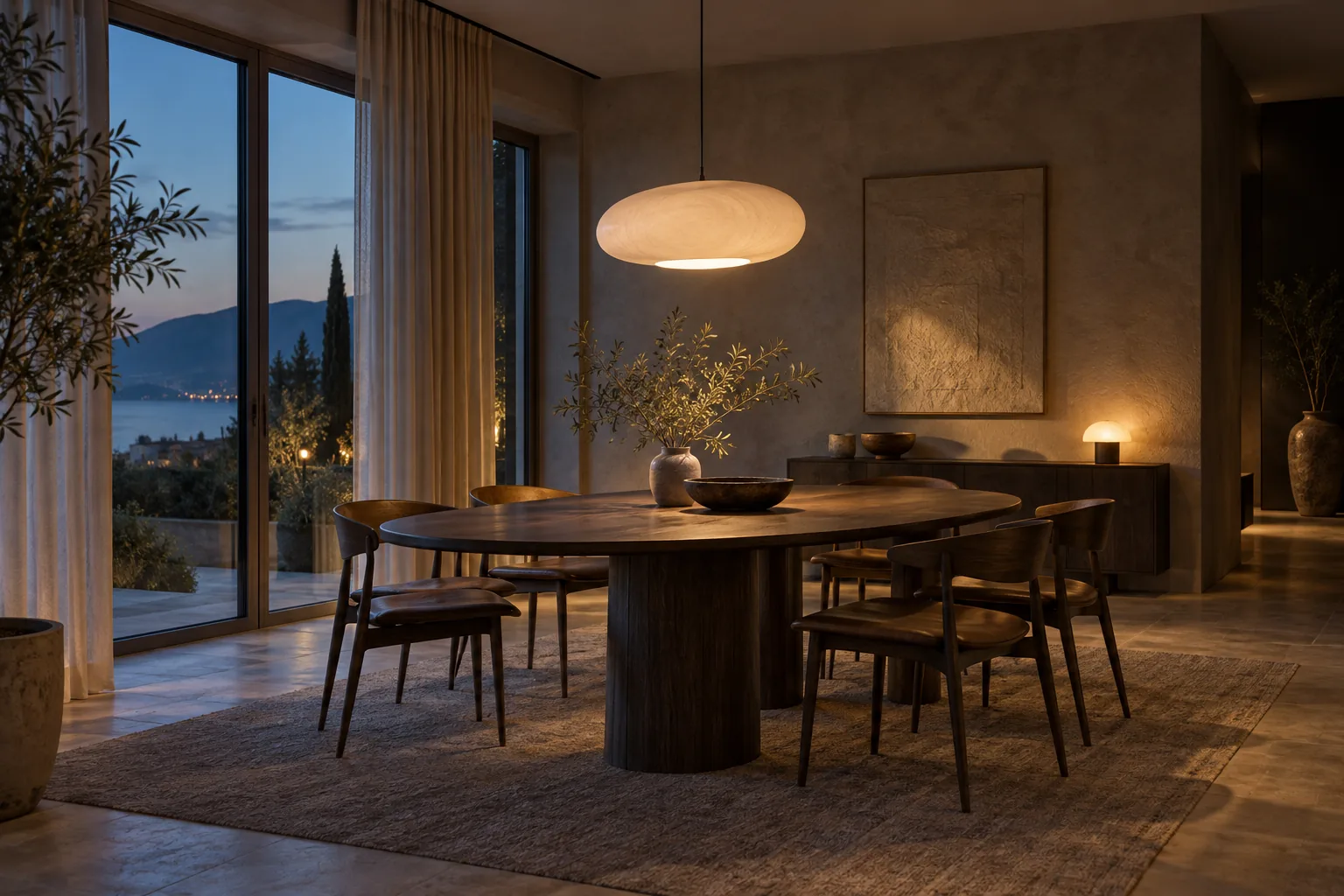
After sunset, a pool of light over a dining table can make it feel like an island. The rest of the room remains present, but less insistent. Distances seem different, edges recede and the people around the table become the focus.
The same room can feel more open when the wall beyond is illuminated too. These are two possible readings of one interior. The distribution of light redirects attention. A lamp is an object to look at, but it also determines what else becomes visible.
Shadow gives form its depth
In very bright interior imagery, shadow can be treated as an imperfection. Yet without differences between brighter and darker areas, forms lose definition. A recess, a table edge or a fold of cloth becomes legible through this variation.
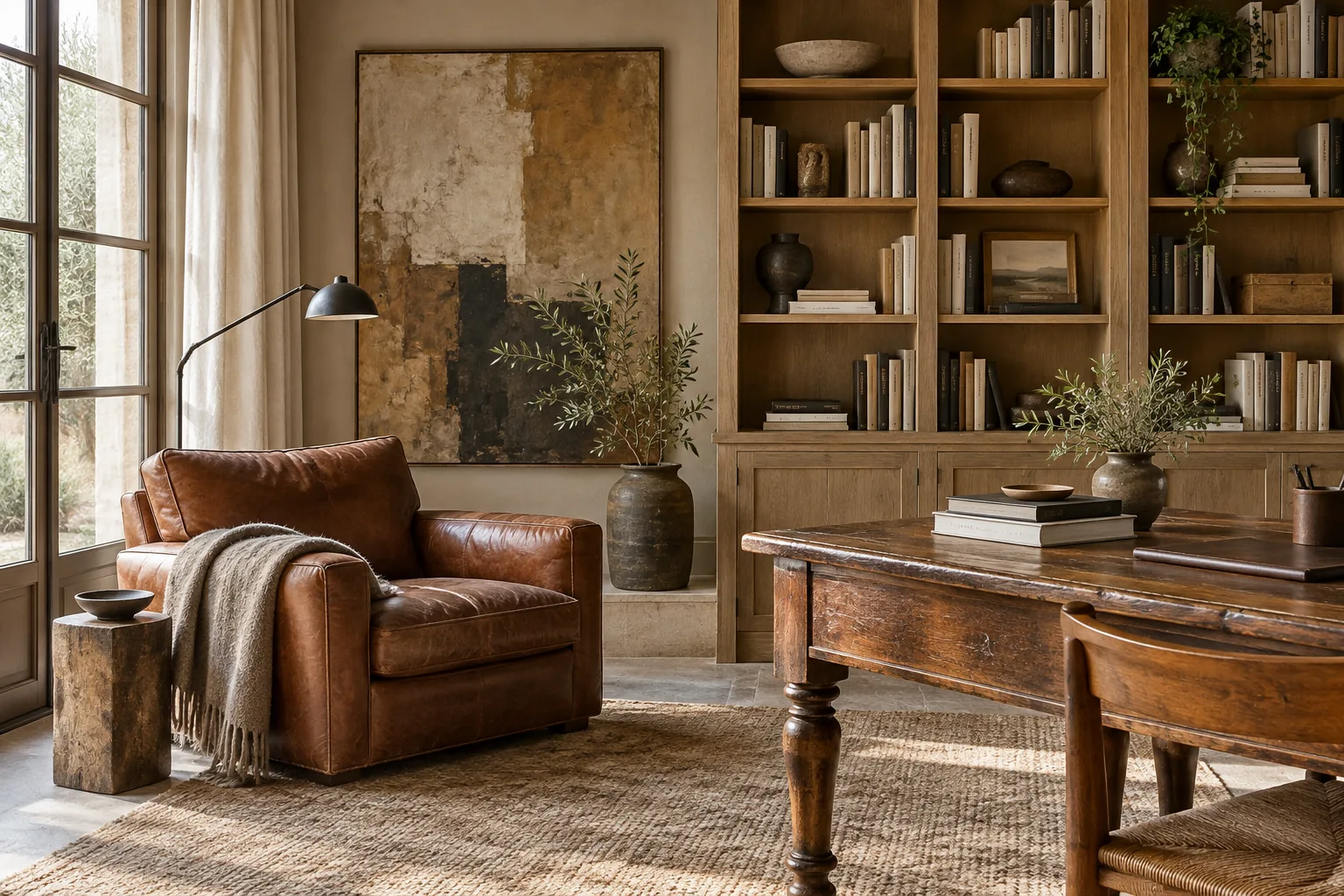
Shadow can bring intimacy, though it has a different role in different places. A reading spot asks for something different from a background seen across the room. The atmosphere lies in the relationship between clarity and withdrawal: some things are readily visible, others only suggested. A room need not disclose everything at once.
Light and material shape each other
Light grazing a plaster wall reveals texture; frontal light can make the same surface appear more even. A polished top introduces reflections and may repeat the light source. Matt cloth receives light more diffusely. The same lamp can create different moods in different surroundings.
Its expression therefore extends beyond the shape of the fitting. Shade, position and nearby surfaces participate in the scene. A discreet object can create a rich effect, while a sculptural fitting may dominate the room even when switched off.
Intimacy has more than one register
Warm light can suggest closeness, but an evening mood is more than a colour. The apparent intensity of the source, whether it is exposed or concealed, and the visual distance between zones all matter. A small luminous point can be expressive without providing enough light for every activity.
The interesting transition is from the room seen as a whole to the places where we choose to settle. In the evening, a home can become a sequence of smaller scenes: the table, an armchair, one end of a bookcase. Its continuity remains while its rhythm changes.
Reading the image
Cool blue daylight at the window contrasts with the warm pool above the table. The background wall retains its texture, while the area to the right recedes. Those differences give the scene depth and an evening atmosphere. This is a visual exploration, not a technical lighting layout.